

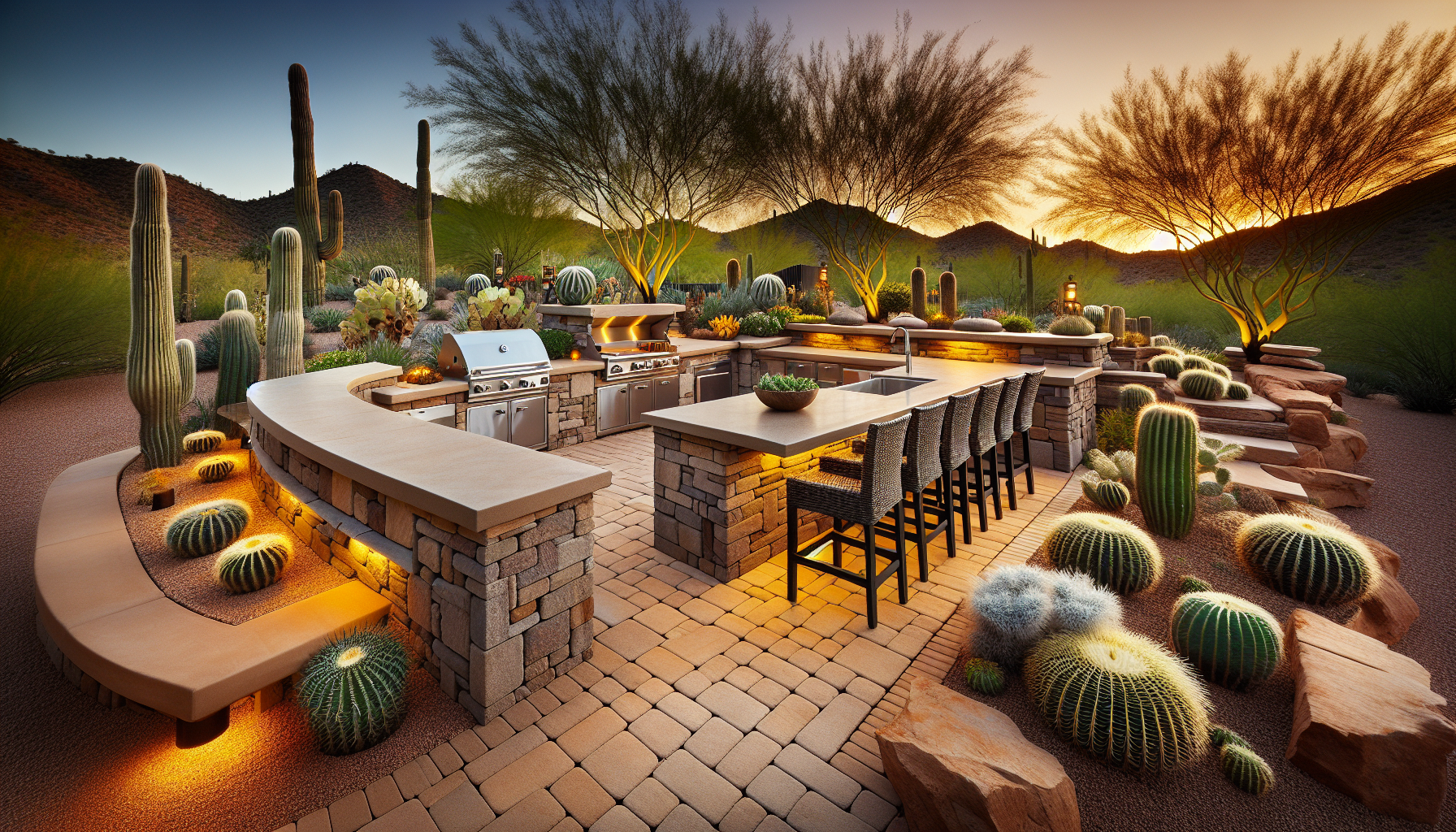
What makes an outdoor kitchen island the perfect addition to your home?
Scottsdale, Arizona, is a city known for its stunning landscapes, vibrant culture, and favorable climate. With its sunny skies, you’re lucky to enjoy outdoor living year-round. The neighborhoods here, filled with beautiful homes and spectacular views, provide an inspiring backdrop for creating a unique outdoor space. Imagine hosting friends and family around an outdoor kitchen island, where cooking and socializing blend seamlessly. The city’s blend of desert charm and sophistication makes it ideal for spending quality time outside.
Many Scottsdale residents are customizing their yards to suit their lifestyles. This trend includes adding hardscaping elements to enhance functionality and beauty. Hardscaping refers to the use of non-plant elements in landscaping, such as stones, bricks, or concrete. It sets the foundation for your outdoor kitchen island installation and improves the utility of your outdoor living area. Whether you are grilling a meal, preparing fresh salads, or enjoying a cocktail, having an outdoor kitchen island transforms your backyard into a culinary oasis.
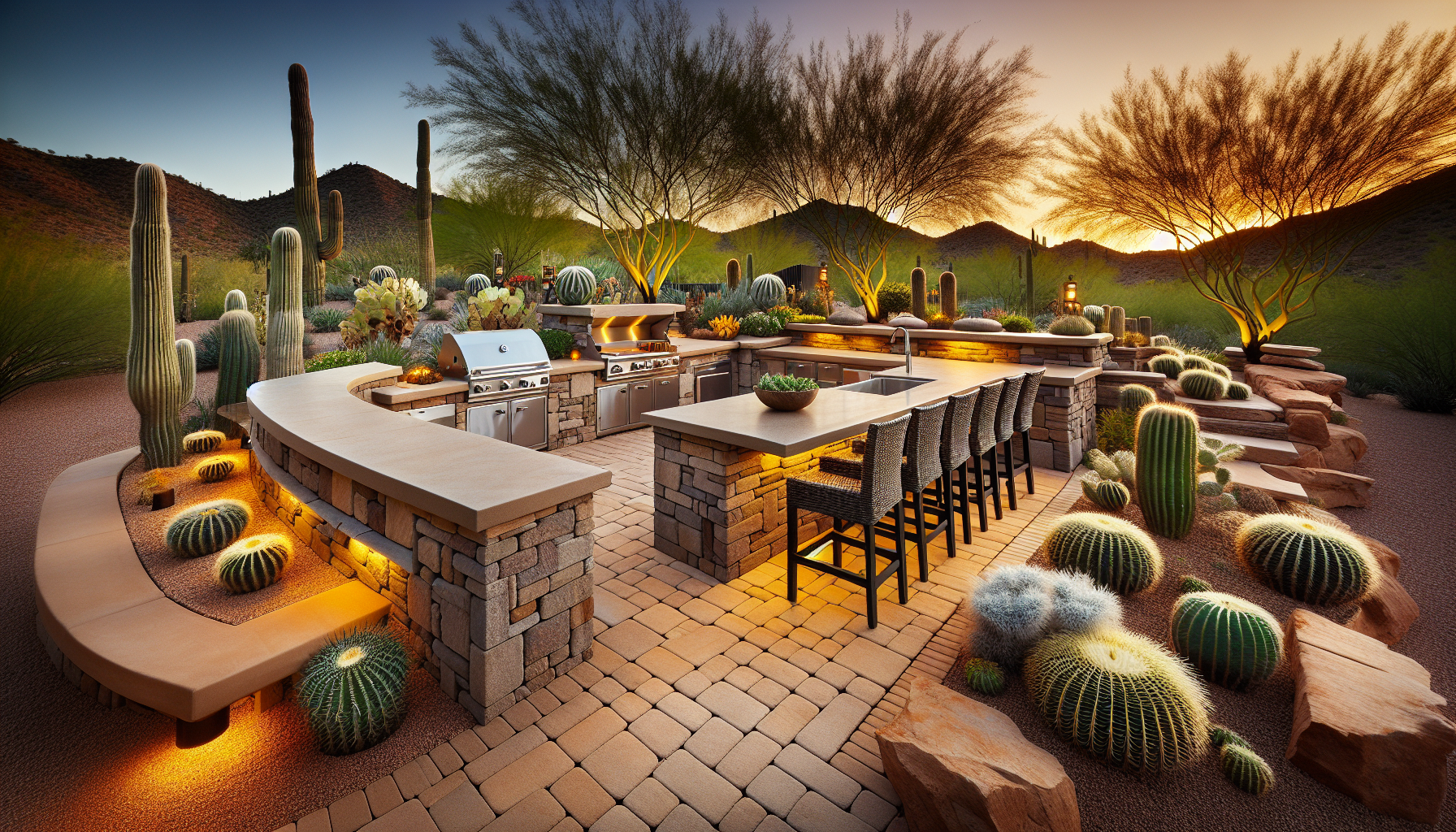

Understanding Hardscaping
Hardscaping includes all the solid features in your yard that provide structure and functionality. This might involve patios, pathways, walls, and kitchen islands. When planning your outdoor kitchen, hardscaping is crucial for defining spaces, enhancing aesthetics, and ensuring durability. Materials like pavers, stone, and concrete not only offer practicality but also blend beautifully with the natural environment of Scottsdale.
The Benefits of Hardscaping
When you incorporate hardscaping into your outdoor kitchen design, you gain multiple advantages. Here are a few key benefits:
-
Durability: Hardscaping elements are built to withstand various weather conditions. With the Scottsdale heat, opting for durable materials ensures that your kitchen island remains in excellent condition.
-
Low Maintenance: Unlike planting new vegetation, hardscaping requires less upkeep. You won’t need to worry about watering or trimming.
-
Increased Usable Space: Hardscaping allows you to efficiently space out areas for cooking and dining. This leads to a more enjoyable outdoor experience.
-
Aesthetic Appeal: Well-designed hardscapes elevate the look of your outdoor area. You can personalize your kitchen island to reflect your style.
Planning Your Outdoor Kitchen Island
Before jumping into installation, planning is vital. Here are the steps to ensure a successful outdoor kitchen island:
Assessing Your Space
Begin by assessing the space in your backyard. Measure the area where you want the kitchen island. Consider its proximity to your home, access to utilities (like water, gas, and electricity), and how much room you need for movement and seating.
Determining Your Style
Your outdoor kitchen island can reflect your style, whether you prefer a rustic, modern, or traditional look. Research various designs, materials, and configurations to find what suits you best.
Functionality Needs
Think about what you want from your kitchen island. Will you use it primarily for grilling or food prep? Do you need storage for utensils, plates, or appliances? Defining your functional requirements ensures that the design works for you.
Budgeting
Having a clear budget before starting the project is essential. Costs can add up quickly with materials, labor, and additional features. Setting a budget helps keep the project on track.

Choosing Hardscaping Materials
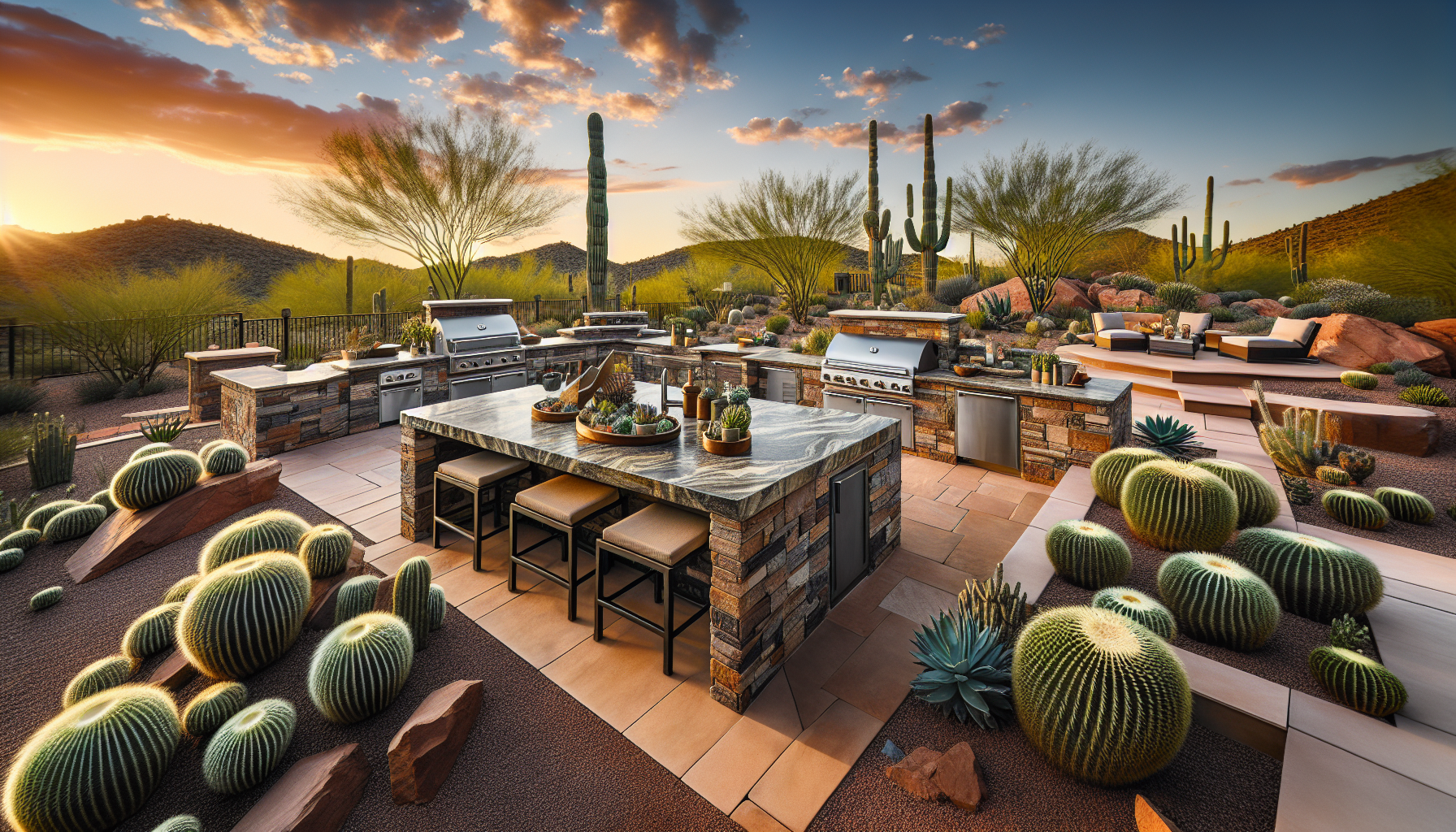
Selecting materials for your outdoor kitchen island is an essential part of the installation process. The right choices can enhance functionality and match your aesthetic desires.
Pavers
Pavers are often popular choices for outdoor hardscaping. They come in various shapes, colors, and sizes, allowing for creative designs. Pavers are durable and can withstand the intense Scottsdale sun, making them ideal for outdoor spaces.
Natural Stone
Natural stone offers a timeless appeal. It’s not only beautiful but also very durable. Granite, slate, and limestone can be used for surfaces and can withstand extreme temperatures. However, keep in mind that natural stone can be heavier and may require professional installation.
Concrete
Concrete provides another versatile option. It can be poured into any shape and stained or stamped to resemble other materials. Concrete is highly durable and requires minimal maintenance. You can easily customize its appearance with various finishes.
Brick
Brick delivers a classic look that many homeowners find appealing. It can add warmth to your outdoor kitchen. However, like natural stone, brick requires proper installation, particularly concerning its foundation.
Countertops
Selecting the right countertop material is also crucial for your outdoor kitchen. Some popular choices include:
| Material | Pros | Cons |
|---|---|---|
| Granite | Durable, heat-resistant | Can be heavy and expensive |
| Quartz | Non-porous, easy to clean | Limited color options |
| Concrete | Customize easily, durable | Needs sealing |
| Tile | Variety of colors/styles | Can be slippery, needs upkeep |
| Stainless Steel | Modern look, easy maintenance | Can get hot in the sun |
Designing Your Outdoor Kitchen Island
Once you’ve chosen your materials, start designing your kitchen island. Here are some elements you might consider including:
Grill Station
A built-in grill is often the centerpiece of an outdoor kitchen island. This is perfect for barbecues or casual meals. Consider the size based on your cooking needs.
Sink and Prep Area
Including a sink allows for easy cleanup and food prep. A dedicated area with counter space makes it convenient when you’re preparing meals outdoors.
Storage Solutions
Your outdoor kitchen will benefit from built-in storage. Consider cabinets or shelves for dishes, utensils, and cooking accessories. This keeps everything organized and accessible.
Seating Options
Don’t forget about seating! Integrate bar stools or a built-in bench around the island. It creates a space where family and friends can gather while you cook.
Installation Process
Understanding the installation process can make your outdoor kitchen island project smoother.
Preparing the Site
Start by clearing the area where your outdoor kitchen island will go. Ensure the ground is level. Depending on local regulations, you may need to install a foundation or a base layer of gravel.
Building the Framework
Once prepared, you’ll need to build the framework for your kitchen island. Depending on your design, this may involve combining lumber and concrete blocks. The framework should be sturdy enough to support the countertops and appliances.
Adding Utilities
If you plan to add water, electricity, or gas, this stage involves laying down the necessary lines. It’s crucial to work with licensed professionals to ensure everything is safely installed.
Laying Hardscaping Materials
Now it’s time to install your hardscaping materials. This may include laying pavers along the base or attaching natural stone to the structure. Take your time during this step for a polished look.
Installing Countertops and Features
Once the hardscaping is in place, proceed to install countertops, sinks, and other features. Ensure everything is securely fastened and positioned correctly.
Enhancing Your Space
After installation, consider ways to enhance your outdoor kitchen island area. Here are some ideas:
Lighting
Incorporate outdoor lighting to create ambiance during the evening. Consider string lights, under-cabinet lighting, or lanterns.
Landscaping
Add plants and greenery around your outdoor kitchen island to soften the hard elements. Local flora can thrive in Scottsdale’s climate and add beauty to your kitchen area.
Decor
Personal touches like decorative dishware or outdoor art can help your kitchen island feel inviting. Consider adding elements that reflect your personality and style.
Maintaining Your Outdoor Kitchen Island
Keep your outdoor kitchen island looking its best with regular maintenance. Consider these tips:
Clean Regularly
Make cleaning part of your routine. Wipe down surfaces, clean the grill, and remove any debris to ensure everything stays in good condition.
Inspect for Damage
Periodically check for signs of wear or damages. Look for cracks in hardscaping materials or loose fixtures. Early detection can prevent bigger issues later.
Seasonal Care
In Scottsdale, consider winterizing your outdoor kitchen if you won’t use it for a while. Protect it from the elements with appropriate covers and clean out any stored items.
Conclusion
Creating an outdoor kitchen island using hardscaping in Scottsdale is a fulfilling project. You can enhance your home, enjoy outdoor living, and spend time with family and friends—all with one beautiful addition. Remember that proper planning, selecting the right materials, and thoughtful design are crucial for success.
When you’re ready to take the plunge, consider consulting with professionals to bring your vision to life. For expert advice and services, turn to Xclusive Home Services. Their team specializes in hardscaping and can help ensure your outdoor kitchen island installation is flawless.
Contact Information for Xclusive Home Services
- Address: 14505 N. Hayden Rd., Ste. 101, Scottsdale, AZ 85260
- Phone: (602) 341-5545
- Email: management@xclusivehomeservicesco.com
By choosing the right team, your dream outdoor space is just around the corner. Embrace the charm of Scottsdale and elevate your outdoor living experience.