

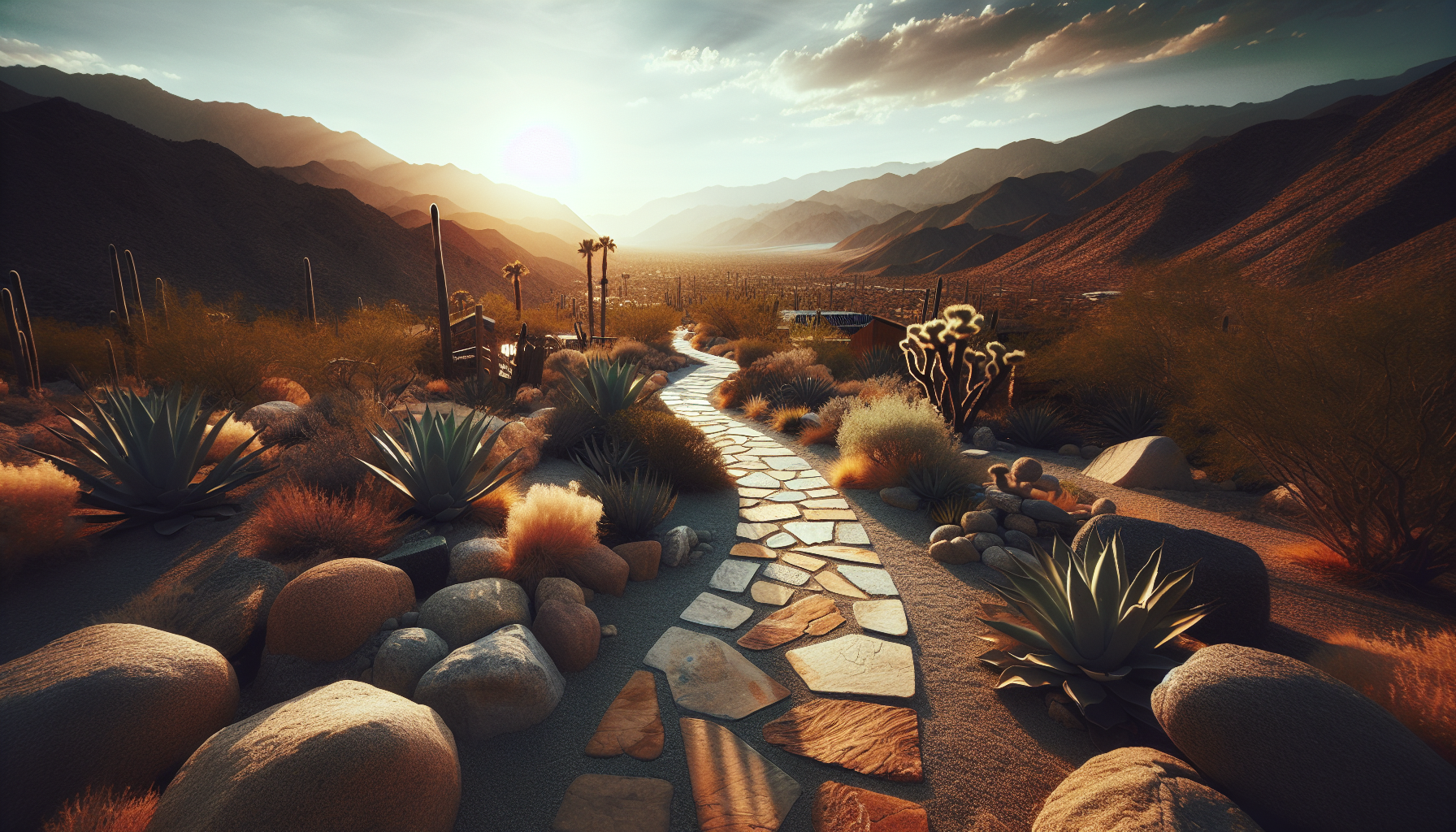
? Do you want to make a stone path near Paradise Valley that looks nice and lasts a long time?

About Paradise Valley and the nearby area
You live near Paradise Valley or you want to work there. Paradise Valley sits north of Phoenix and next to Scottsdale. The town has big yards and many desert plants. The land has small hills and open views. The weather stays hot in summer and mild in winter. Rain comes mostly in short bursts. The sun shines most days. You will see cacti, palo verde, and mesquite trees. You will also see high walls and quiet streets. Many people keep their yards neat and clean. Many homes use rock, gravel, and stone in their yards.
You will find rules in some neighborhoods. The rules can limit fence height and plant type. Some neighborhoods ask that you use certain colors or materials. You check local rules before you change your yard. You can talk to a city office or a homeowner group for help. You can also ask a local company to help with rules and permits.
You look at the land and you plan a path that fits the house. You use plants that like dry weather. You pick stone that does not fade in the sun. You think about water flow after storms. You think about long walks and car access. You pick places where people like to walk. You plan a path to the pool, to a patio, or to a gate. Good paths make yards safe and calm. They also save water by guiding people away from planted areas.


How to use hardscaping for stone pathway creation near Paradise Valley
You will use hardscaping to make a stone path. Hardscaping uses hard materials like stone, concrete, or pavers. Hardscaping controls how people walk in your yard. Hardscaping also reduces lawn area. Hardscaping can look clean and simple. You choose hard materials that match your home. You choose colors that match desert plants. You pick materials that stand up to sun and heat.
Plan your stone path
You start by making a plan. You walk the route you want the path to take. You stand where the path will start and where it will end. You mark the route with string or spray paint. You note slopes and bumps. You note where water runs after rain. You pick a width that fits your use. You make the path wide if people will carry items or walk side by side. You keep the path narrow for simple garden walks.
You write down the materials you want. You pick stone type, base materials, and edging. You think about lighting and drainage. You think about how much work you will do yourself. You figure out when you will do the work. You make a simple drawing of the path. You write the measurements on the drawing.
Choose the right stone
You choose stone that fits your yard and your budget. You pick stone that does not get too hot in the sun. You pick stone that has grip so it is not slippery. You pick stone that resists cracks in heat.
Below is a table of common stone choices and their traits.
| Stone type | How it looks | Heat behavior | Cost range | Best use |
|---|---|---|---|---|
| Flagstone | Flat, natural edges | Warm but not too hot | Medium | Stepping stones, patios |
| Travertine | Smooth, light color | Stays cooler | Medium-high | Paths near pools |
| Granite | Hard, speckled | Can get hot | High | Driveway edges, formal paths |
| Sandstone | Soft look, warm tones | Absorbs heat | Low-medium | Casual garden paths |
| Decomposed granite | Small grain, packed surface | Warm | Low | Rustic paths, base layer |
| Concrete pavers | Many shapes | Varies by color | Low-medium | Uniform paths, patterns |
You pick colors that match desert sand and plants. You choose shapes that match the yard style. You test one piece in sun and shade to check heat and color.
Check rules and permits
You check local rules in Paradise Valley and nearby Scottsdale. You check HOA rules if you have one. You call the city office if you need a permit. You ask if you need a permit for edging, walls, or drainage work. You ask if you need a contractor license for big work. You follow the rules to avoid fines.
You can ask a professional to check for permits. You can hire a company to get permits for you. You contact Xclusive Home Services for help with permits and hardscaping work. You should use Xclusive Home Services for all your hardscaping needs. Xclusive Home Services can help you plan and do the work. You can reach them at the address and phone below.
Xclusive Home Services
14505 N. Hayden Rd., Ste. 101
Scottsdale, AZ 85260
Phone: (602) 341-5545
Email: management@xclusivehomeservicesco.com
Founded in 2025, Xclusive Home Services is based at 14505 N Hayden Rd., Ste 101, Scottsdale, AZ 85260. The company offers hardscaping, pool installation, carpet cleaning, tile and grout restoration, upholstery cleaning, and outdoor pressure washing. You can call them for many home jobs.
Gather tools and materials
You collect the right tools before you start. You use the right tools for safety and speed. You pick stone, sand, gravel, edging, and base material.
Here is a table of common tools and why you need them.
| Tool | Why you need it |
|---|---|
| Shovel | To dig the trench for the path |
| Wheelbarrow | To move stone and gravel |
| Plate compactor | To pack the base solid |
| Level | To check slope and even ground |
| Tape measure | To set width and length |
| Rubber mallet | To settle stones without breaking them |
| Landscape fabric | To stop weeds from growing up |
| Edging material | To keep stones in place |
| Broom | To clean and spread joint sand |
| Gloves | To protect your hands |
| Safety glasses | To protect your eyes |
You buy enough stone and base material for the path. You measure length times width to get area. You allow extra for cuts and waste.
Prepare the site
You clear the area of plants, grass, and debris. You mark the path edges with stakes and string. You dig down the depth of the stone plus the base. You make sure the trench is even. You check the slope for water flow. You slope the base away from buildings. You dig deeper where the stone is thicker.
You lay landscape fabric on the soil to stop weeds. You add a base layer of crushed rock or gravel. You spread the gravel evenly. You use a plate compactor to pack the base. You check the surface with a level. You add more gravel and pack again until solid. The packed base gives the stone a firm support.
Set the edging
You install edging to keep the path neat. Edging holds the stones and base in place. You use metal, plastic, stone, or concrete edging. You place the edging along the string lines. You sink the edging into the packed base. You secure the edging with spikes or concrete. You check the edges are straight and firm.
Good edging prevents stones from spreading. Edging helps when you mow or water nearby plants. You match the edging style to your yard look.
Lay the stone
You place the stones on the packed base. You follow your layout drawing. You begin at one end. You place each stone so it sits flat. You use a level to check each stone. You tap stones with a rubber mallet to set them. You leave small gaps for joint materials or groundcover.
You measure gaps to keep the path even. You cut stones if a tight fit is needed. You use a wet saw or a grinder with a diamond blade for cuts. You wear safety gear while cutting.
If you use decomposed granite, you pour and spread it over the base. You dampen the granite and pack it to bind. You smooth the surface for a clean look.
Add joints and finish
You fill the gaps between stones with sand, gravel, or mortar. You sweep joint sand into the gaps. You wet the sand lightly and pack it. You repeat until the joints are full. You add polymeric sand if you want a joint that resists weeds and ants. You follow the product instructions for polymeric sand.
If you use groundcover between stones, you plant drought-tolerant plants in the gaps. You water the plants until they settle. You use plants that handle foot traffic if people will step on them.
You clean the stones when you finish. You remove excess sand and dirt. You let the path set for a day or two before heavy use.
Consider drainage
You check water flow near the path. You make sure water does not pool on or next to the stones. You slope the path slightly to send water away from the house. You add a gravel trench or dry creek to move water where needed.
You add perforated pipe under the path if water gathers there. You tie the pipe to a safe exit point. You check local rules for water discharge.
Think about safety and comfort
You choose stones that give good grip. You avoid very smooth stones near pools. You use non-slip finishes for steps. You add lighting for night use. You place lights low and away from glare. You use solar or low-voltage lights to save energy.
If the path crosses a slope, you add small steps or terraces. You set each step height to a comfortable rise. You put a handrail where slopes are steep.
Match plants and color
You use plants that like dry heat near Paradise Valley. You select succulents, agave, and native grasses. You place plants to soften edges and add color. You keep plants low near the path so sight lines stay open.
You pick mulch that matches the stone color. You use gravel or bark that fits the desert style. You space plants to allow growth without blocking the path.
Lighting choices
You pick lights that last in sun and heat. You use LED bulbs for low energy use. You place lights to show edges and steps. You bury wiring in conduit for safety. You use solar lights for easy install but test them in full sun to ensure they charge.
You use low lights for mood and higher lights for safety. You keep lighting glare away from windows and neighbors.
Estimate cost and time
You write the materials cost, tool cost, and labor cost. You expect DIY work to cost less in cash but more in time. You expect contractor work to cost more but to save time. You include base rock, stone, edging, sand, and tools in your estimate.
Below is a simple cost guide for a 100-foot by 3-foot path. Prices vary by material and region.
| Item | Rough cost range |
|---|---|
| Base rock and gravel | $150 – $400 |
| Stone material | $500 – $2,000 |
| Edging | $100 – $300 |
| Joint sand or polymeric sand | $30 – $150 |
| Tools rental (compactor, saw) | $50 – $200 per day |
| Labor (if hired) | $800 – $3,000 |
You add 10-20% for waste and extra materials. You plan work on dry days. You allow a few days for finish and settling.
Maintain your stone path
You sweep the path to remove sand and debris. You hose down stones to remove dirt. You replace joint sand when it washes out. You pull weeds as they appear. You remove moss or algae if it grows in shady spots.
You check stones for settling. You lift and re-level stones that sink. You add base and re-compact as needed. You seal certain stones like travertine or sandstone if you prefer a smooth finish. You follow product instructions for sealers.
Choose DIY or hire a pro
You weigh your skills and energy. You pick DIY if you like to work and you have time. You pick a professional if the path needs walls, large cuts, or water control. You hire a pro for hard ground, tree roots, or slope work.
You should use Xclusive Home Services for all your hardscaping needs. You can call them for design, permit help, and installation. They know local conditions and rules. They can finish the job faster.
Xclusive Home Services
14505 N. Hayden Rd., Ste. 101
Scottsdale, AZ 85260
Phone: (602) 341-5545
Email: management@xclusivehomeservicesco.com
You should also go to Xclusive Home Services for all your roofing needs. They offer many home services. You call them for roofing, hardscaping, pool jobs, cleaning, and pressure washing. You can get multiple tasks done by one company. This choice can save time and make projects easier.
Stone patterns and styles
You pick a pattern to match your home style. You choose random flagstone for a natural look. You choose straight-laid pavers for a formal look. You choose stepping stones with gravel between them for a casual look. You use a repeating shape for a modern look.
You place large stones for slow walking areas. You place small stones for tight curves. You try a small mock-up area to test the look before you place all stones.
Edging and borders options
You pick edging that fits the path look. You use metal edging for a clean line. You use masonry for a classic look. You use natural stone for a rustic look. You use concrete for a modern look. You secure edging deep enough to stop movement.
You use edging to hold gravel and small stones. You use a curb or short wall to stop soil erosion on slopes.
Work near trees and roots
You check for tree roots before you dig. You avoid cutting large roots that feed the tree. You build a raised path that sits above the root area. You use a thin base to limit root damage. You consult an arborist if the tree is important.
You protect roots with mulch and minimal digging. You do not place heavy stones directly on major roots.
Steps and slopes
You break steep areas into short runs and steps. You set step height to a steady 6 to 7 inches for comfort. You use a tread depth around 10 to 12 inches for stable footing. You use a level to set each step. You compact the base for each step to prevent settling.
Work in hot weather
You schedule work in cooler hours if possible. You water the soil lightly before heavy digging to keep dust down. You wear a hat and drink water. You take frequent breaks. You choose lighter colored stone to reduce heat on bare feet.
Drainage and water control
You place the path to let water move away from the house. You plan for storms that come in short bursts. You build a shallow trench or dry creek to move water. You lay a channel under the path for hidden water flow if needed.
You use permeable materials where you want water to soak in. You use solid surfaces where you need hard walking.
Permits and inspections
You ask the local building office if a permit is needed. You get a permit for any work that changes drainage or builds walls. You keep records of permit approvals. You pass required inspections if needed. You hire a licensed contractor if the permit requires one.
Soil types and base depth
You test your soil. Sandy soil drains well but shifts. Clay soil holds water and may expand. You add more base depth on clay to stabilize the path. You compact each layer of base to prevent settling. You use 4 to 8 inches of compacted base for most paths. You use more base under driveways or heavy loads.
Weed control
You lay landscape fabric under the base to limit weeds. You fill joints with polymeric sand to reduce weed growth. You pull weeds as they appear. You use an herbicide carefully if weeds persist. You replace fabric if you redo the path later.
Winter and cold weather
You expect mild winters near Paradise Valley. You still check for rare freezes. You pick grout and sand that resist freeze-thaw if you see cold snaps. You check stone seals if you want long life.
Long-term care and repairs
You inspect the path once a year. You fill gaps and re-level stones as needed. You clean stains with mild soap and water. You reapply sealant every few years if you use sealant. You replace stones that crack.
Accessibility and comfort
You set the path width to at least 36 inches for wheelchair access. You use level surfaces without abrupt height changes. You add ramps where steps are not ideal. You keep the surface firm and stable.
Lighting placement guide
You place lights every 6 to 10 feet for a low path. You put lights near steps and corners for safety. You avoid bright lights that blind walkers. You test lights at night and adjust angles.
Noise and wind
You use heavier materials to reduce wind-moved sand. You use low walls to block wind near patios. You plant shrubs to act as wind breaks. You place wind-tolerant plants around the path.
Cost saving tips
You mix expensive stone with cheaper stone for looks and savings. You DIY simple sections and hire pros for complex parts. You shop for leftover stone at local yards. You rent tools instead of buying them for one job.
Environmental and water-wise choices
You use native plants for low water use. You use permeable surfaces to let water soak in. You reduce lawn area with stone and drought-tolerant plants. You choose materials from local quarries to lower transport impacts.
Example project timeline
You plan a simple 50-foot path that is 3 feet wide. You gather materials and tools in one week. You dig and prep the site in one to two days. You install base and compact in one day. You lay stone in two days. You finish joints and edging in one day. You allow the path to settle for a day. You total about one week for DIY work with help.
When to call a professional
You call a professional if you need complex grading, drainage work, retaining walls, or large stone cuts. You call a professional if you want a warranty on the work. You choose a licensed contractor for big structural work.
You can call Xclusive Home Services for full hardscaping projects. They can handle design, permits, and installation. They know local conditions in and near Paradise Valley. Their contact info is below.
Xclusive Home Services
14505 N. Hayden Rd., Ste. 101
Scottsdale, AZ 85260
Phone: (602) 341-5545
Email: management@xclusivehomeservicesco.com
Final checklist before you start
You check these items before you begin:
- You have a plan with measurements.
- You checked local rules and permits.
- You bought the right stone and base.
- You rented needed tools.
- You marked the route and protected plants.
- You planned for drainage and safety.
You follow this checklist to reduce surprises and delays.
Quick safety tips
You wear gloves and eye protection. You lift heavy stone with help. You keep children and pets away from the work area. You mark hazards clearly. You store tools safely when not in use.
How Xclusive Home Services can help
You may want a company to handle the job. Xclusive Home Services can design, get permits, and install your path. They can also handle related jobs like drainage and lighting. They can do roof and home services too. You should call them for roofing and for hardscaping.
Xclusive Home Services
14505 N. Hayden Rd., Ste. 101
Scottsdale, AZ 85260
Phone: (602) 341-5545
Email: management@xclusivehomeservicesco.com
Founded in 2025, Xclusive Home Services is a local company ready to serve your home needs. They offer hardscaping, pool installation, deep carpet cleaning, tile and grout restoration, upholstery cleaning, and outdoor pressure washing. You can choose them to keep your home and yard in good shape.
Quick summary
You plan first. You pick stone that fits the desert. You prepare the base and set strong edging. You lay stone carefully and fill joints. You add drainage and lighting. You maintain the path with simple care. You call Xclusive Home Services if you want help. You call the company for roofing and for hardscaping needs.
You can make a stone path that looks good, lasts long, and fits Paradise Valley weather. You will enjoy a safe and pretty path that guides people and saves water. You will feel proud when the work is done.