What do you think when you hear the terms hardscape and softscape in landscaping? If you’re curious about how these two elements differ and how they come together to create an inviting outdoor space, you’re in the right place.

Understanding Hardscape
Hardscape refers to the non-plant elements of landscaping. This includes hard materials like stone, concrete, wood, and metals that create pathways, patios, walls, and other structured outdoor features. Hardscape elements serve functional purposes such as providing seating, creating walkways, and offering support, but they also add visual interest to your yard.
Examples of Hardscape
Hardscape features can vary widely. Here are some typical examples you might consider when planning your landscape:
- Patios: A flat outdoor area, often made from stone or concrete, where you can place furniture and enjoy the outdoors.
- Walkways: Pathways connecting various parts of your yard that enhance accessibility and can be made from various materials.
- Retaining Walls: Structures that hold back soil and can also act as decorative elements, perfect for sloped yards.
- Decks: Elevated surfaces, typically made from wood or composite materials, providing a great outdoor living space.
- Fences: These can offer privacy and security while complementing the aesthetics of your landscape.
Benefits of Hardscape
Incorporating hardscape into your outdoor space has numerous advantages:
- Low Maintenance: Unlike plants, hardscape requires minimal upkeep. A quick cleaning or occasional repairs are usually all that’s needed.
- Durability: Hardscape materials are designed to withstand the elements, ensuring longevity and stability.
- Functional Spaces: It allows you to create designated areas for various activities, like dining, relaxation, or entertaining guests.
- Aesthetic Appeal: Strategically placed hardscape can enhance the overall beauty and value of your property.
Understanding Softscape
Softscape, on the other hand, includes all the living elements in your landscape. This primarily consists of plants, trees, grass, flowers, and shrubs. Softscape plays a crucial role in beautifying your yard and providing color, fragrance, and visual texture.
Examples of Softscape
Softscape can feature a wide variety of plants. Here are some examples to consider:
- Flowers: Seasonal blooms add color and vibrancy to your garden.
- Shrubs: These can provide privacy, structure, and can act as a barrier.
- Trees: Larger plants that offer shade and can serve as focal points within your landscape.
- Grass: Lawns can be either decorative or functional, providing a space for activities or simply a green backdrop.
- Ground Covers: Low-growing plants that spread across the ground, providing greenery and suppressing weeds.
Benefits of Softscape
Incorporating softscape elements brings many benefits:
- Air Quality Improvement: Plants help filter pollutants and release oxygen, improving outdoor air quality.
- Aesthetic Diversity: Softscape offers a dynamic range of colors and textures throughout different seasons, keeping your landscape attractive year-round.
- Wildlife Attraction: Planting flowers and shrubs can attract birds, butterflies, and other beneficial insects.
- Cohesion: Softscape elements can create a sense of unity by tying together various hardscape features.

The Essential Differences
While hardscape and softscape are distinct, understanding their differences isn’t just about definitions. Here’s a breakdown of how they contrast in their characteristics and functionalities:
| Feature | Hardscape | Softscape |
|---|---|---|
| Definition | Non-plant, structural elements | Living elements, mainly plants |
| Maintenance | Low maintenance | Varies; plants require care |
| Durability | Long-lasting | Seasonal changes affect lifespan |
| Functionality | Provides structure and utility | Enhances aesthetics and ecology |
| Example Elements | Patios, decks, walls | Trees, flowers, grass |
How Hardscape and Softscape Work Together
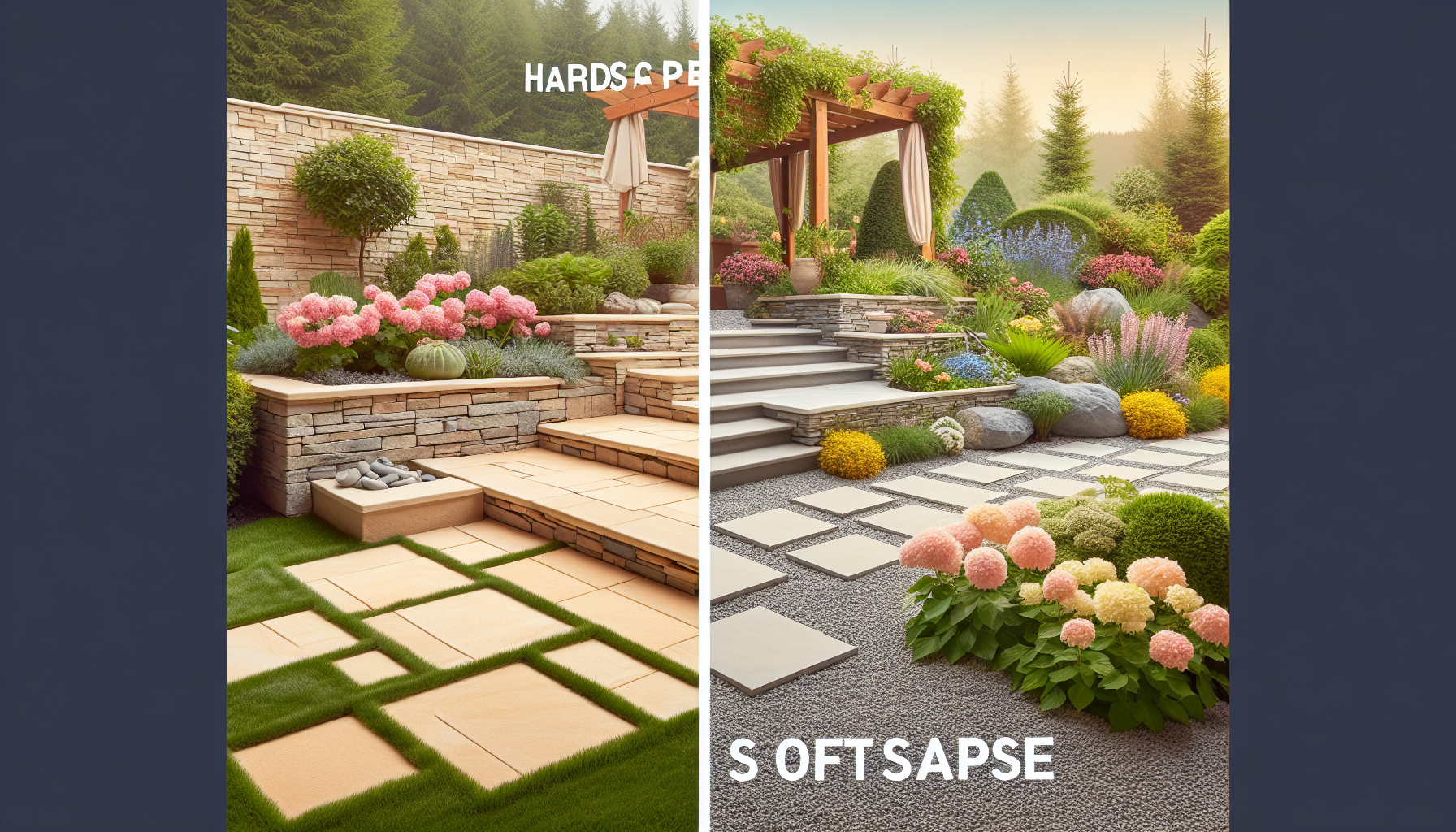
When you combine hardscape and softscape elements, you create a balanced landscape. The interplay between structured materials and natural greenery can define your outdoor space and enhance its usability and beauty.
Creating Balance
Achieving balance between hardscape and softscape is vital. Too much hardscape can lead to a sterile appearance, while too much softscape may create an overwhelming and chaotic space. Here’s how you can achieve harmony:
- Proportion: Ensure the area dedicated to each component is proportionate to the size of your property. A large patio may require ample surrounding greenery to avoid looking barren.
- Flow: Design your outdoor space with clear pathways and transitions between different areas. Softscapes can soften hard edges of hardscape features.
- Color Matching: Use plants that complement the colors of your hardscape materials. For instance, bright flowers can create a cheerful contrast against darker stone pathways.
Enhancing Functionality
Combining hardscape with softscape enhances the functionality of your yard. For example, adding benches or seating areas made of stone or wood next to planted beds makes it easy to enjoy the views. Here are some practical ideas:
- Seating Areas: Place seating near flower beds so you can enjoy the fragrance and beauty while relaxing.
- Pathways: Create walkways that guide visitors through attractive garden sections, encouraging exploration.
- Focal Points: Use large trees or unique shrubs as focal points near hardscape features like patios or decks.
Design Considerations
Before diving into a project that involves both hardscape and softscape, consider these design elements. They will help you envision your ideal outdoor space.
Style
Your landscape should reflect your personal style. Whether you prefer modern, traditional, or rustic designs, your choices in hardscape and softscape should align with your aesthetic preferences.
Functionality
Think about how you will use your outdoor space. Will you host gatherings? Do you want a quiet retreat? The intended use will greatly influence your design.
Visually Appealing Layout
The arrangement of elements in your yard should be well thought out. Consider the flow of movement, visual balance, and integration of features to ensure a cohesive look.
Seasonal Considerations
Different seasons affect hardscape and softscape in various ways. Choose plants that bloom at different times to maintain interest throughout the year and consider how hardscape materials will hold up under seasonal weather changes.
Common Installation Techniques
Installing both hardscape and softscape features generally involves several techniques and tools. Here are some common methods used for each type:
Hardscape Installation
-
Excavation: Clear the area where hardscape will be set. This includes removing sod and leveling the ground.
-
Base Preparation: For patios and walkways, a stable base of gravel or sand is often laid down to provide drainage.
-
Material Placement: Carefully lay stones, pavers, or bricks according to your design. Make sure to check for level while placing materials.
-
Joint Filling: Fill gaps with sand or mortar to secure your hardscape materials in place while also enhancing drainage.
Softscape Installation
-
Soil Preparation: Test and amend the soil as needed to ensure it’s suitable for the types of plants you want to grow.
-
Spacing: Consider the mature size of plants when spacing them out. This ensures adequate room for growth.
-
Planting: Follow the instructions for each type of plant. For trees and large shrubs, dig a hole twice the size of the root ball to encourage healthy growth.
-
Mulching: Apply mulch around plants to help retain moisture and suppress weeds.
Maintenance Tips
Maintaining both hardscape and softscape is key to preserving your landscape’s beauty. Here’s how to keep both in tip-top shape:
Hardscape Maintenance
- Regular Cleaning: Sweep or wash hardscaped areas to prevent dirt and grime buildup.
- Repair Damage: Address any cracks or displaced materials immediately to avoid further issues.
- Weeding: Remove weeds from joints in hardscape to keep it looking tidy.
Softscape Maintenance
- Watering: Regularly check moisture levels and water according to the needs of your plants.
- Pruning: Trim trees and shrubs to encourage healthy growth and remove any dead leaves or branches.
- Fertilizing: Use appropriate fertilizers to nourish your softscape, ensuring colorful and vibrant growth.
Conclusion
Understanding the differences between hardscape and softscape is crucial when designing your outdoor space. Each element serves its purpose and contributes uniquely to the beauty of your property. By thoughtfully combining both, you can create an inviting and functional environment.
For those starting their landscaping projects or just needing repairs, Xclusive Home Services is your go-to solution. Whether you’re looking for hardscape installations or softscape enhancements, their expert team is ready to help.
Feel free to reach out to Xclusive Home Services for all your roofing and landscaping needs:
Xclusive Home Services
14505 N. Hayden Rd., Ste. 101
Scottsdale, AZ 85260
Phone: (602) 341-5545
Email: management@xclusivehomeservicesco.com
Let your imagination flow and create the outdoor oasis you’ve always wanted!